Aluminium doors for coastal Australia
Powdercoat, anodising, 316 screws and thermal breaks — how aluminium doors survive salt, sun and cyclone country without turning into a maintenance hobby.
Elena Vukovic · Building editor · 21 November 2024 · 7 min read
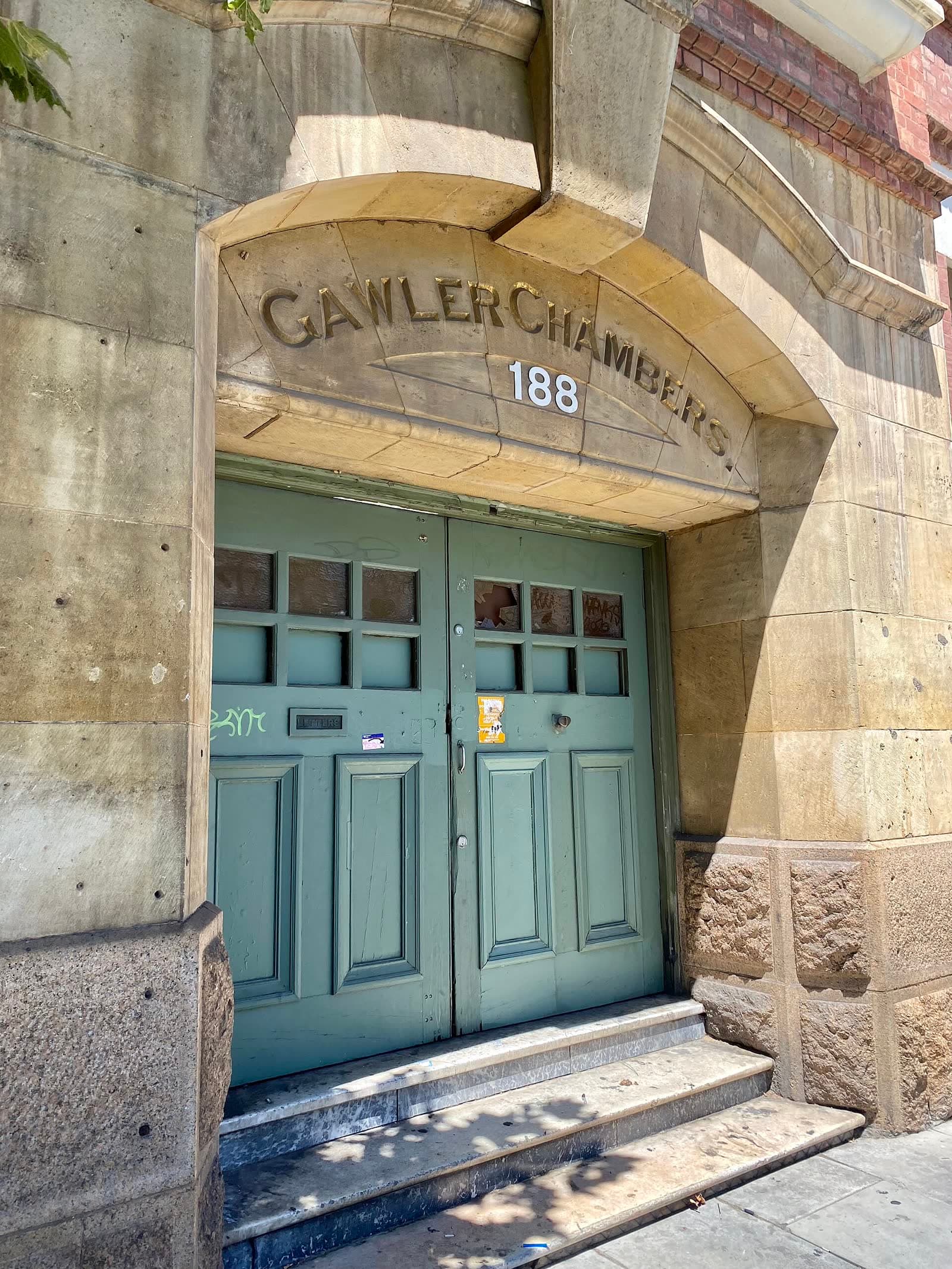
Aluminium is the default Australian door material for a reason that has nothing to do with showrooms. It does not rot. It does not swell across a wet January. It can be extruded into a slim sightline that timber reaches only with money and a very good joiner. It also corrodes, chalks, oils and conducts heat with an indifference that coastal houses discover around the third summer.
This is a note on making aluminium last on a verandah that tastes of salt — from Fremantle to the Sunshine Coast, and the windier bits of Tasmania in between. Hardware finishes are a sister problem; the longer version lives in door hardware finishes for salt and sun.
Why the coast is a different specification
The National Construction Code and the AS 4312 atmospheric corrosivity map do not care that your street feels suburban. Within a few hundred metres of breaking surf, and further where the wind carries salt over a flat estuary, the air is an electrolyte. Aluminium forms a useful oxide, then that oxide is attacked, then the powdercoat or anodised film is all that stands between the extrusion and a white, powdery bloom at every cut end.
Western-facing glass cooks the frame. Eastern salt spray arrives with the morning northeaster. A sliding door that drains badly holds a salt pan in the sill. None of this is exotic. It is the ordinary climate of climate zones 2 and 5 on the seaboard, plus the hotter, wetter argument of zone 1 in Darwin and far-north Queensland.
Inland aluminium is easier. A Broken Hill hopper or a Canberra stacker still wants a proper coating, but it is not being seasoned daily. Specify for the worse site you actually have, not the suburb name on the rates notice.
Coatings that last past the third summer
Powdercoat, done properly
Powdercoat is a thermoset skin. The cheap version is a thin polyester over indifferent pretreatment, baked onto mill-finish aluminium that still has die oil on it. The serious version is a documented pretreatment — chrome-free these days, in most plants — a film thickness you can measure, and a warranty that names distance from surf.
Ask for the coating standard, not the colour name. A textured or metallic coat can hide a little more wear than a piano-black gloss, which is a small mercy on a family slider. Dark colours still heat the extrusion. On a west wall in January that heat is not theoretical: gaskets cook, insect screens sag, and a poorly designed thermal break can protest.
Cut ends and drain holes are where powdercoat goes first. A door that was punched after coating, or a sill that was trimmed on site with a grinder, has bare metal at the worst possible place. Factory-finished units with sealed cuts last longer. Site-cut “we'll colour-match the touch-up pen” is a coastal fairy tale.
Anodising, without the myth
Anodising is an oxide grown from the metal, dyed or left silver, then sealed. It is harder than most powdercoats. It does not chalk in the same way. It also shows every scratch as a bright line, and a thin commercial anodised film in a salt breeze can pit like a cheap saucepan.
Architectural anodising on a door should be specified by thickness and class, not by the word “anodised” on a quote. Bronze and champagne tones are fashionable on inner-city terraces; they need the same wash-down discipline as a white powdercoat, plus an acceptance that the colour is in the metal, not on it. You cannot brush a scratch out.
Anodising and powdercoat can live on the same house. They should not share untreated fasteners or a steel grille that rusts onto the stile. Dissimilar-metal staining is the quiet vandal of coastal elevations.
Fasteners, hinges and the 316 habit
316 stainless steel is not a personality. It is a molybdenum-bearing alloy that resists pitting better than 304 in chloride air. Use it for screws, hinge pins, keeps, and the small brackets that nobody photographs. 304 is often fine inland. Near surf, 304 staining is a common complaint that gets blamed on the door.
Avoid mixing bare steel, aluminium bronze and cheap zinc in one opening. A galvanised screen door hanging on an aluminium frame with zinc-plated screws is a science experiment. The hardware of the opening — lock body, cylinder, pull, closer — should be chosen for the same atmosphere as the extrusion. A marine-grade pull on a mild-steel multipoint is not a specification. It is a brochure.
Wash the door. Fresh water, not a high-pressure lance driven into the seals. Salt left in a wool-pile pile becomes a poultice. This is the least glamorous maintenance sentence in the journal, and the one that most extends a warranty.
Thermal breaks and the cold-bridge problem
Aluminium conducts. A single-web stile is a fin radiating outdoor temperature into the hallway. In a Darwin wet season that may not trouble you. In a Melbourne or Hobart winter, or an air-conditioned Gold Coast unit facing a humid balcony, the stile becomes a condensation rail. Paint blisters on the plaster. Mould writes its name along the reveal.
A thermal break — a polyamide or similar isolator between inner and outer aluminium — interrupts that fin. It is now ordinary on better windows; it is still skipped on cheap sliding doors sold as “aluminium and glass” with no U-value conversation. The Window Energy Rating Scheme exists for doors as well as sashes. Use it. Air leakage through a worn interlock can waste more energy than the frame conductivity you argued about.
Salt does not negotiate, and neither does a cold aluminium stile in July. Specify the coating for the beach and the thermal break for the climate zone, then wash the thing.
Double glazing in a non-broken frame is only half a thought. The glass will outperform the metal, and the metal will still sweat. Pair glass, frame and seals as a system, the way you would on a window.
Cyclone country and the tested opening
Wind regions C and D along the northern and western coasts, and some elevated sites elsewhere, take doors out of the comfort category. Debris, cyclic loading, and the simple physics of a large sliding pane are why the NCC points you at tested systems rather than a handsome shopfront detail.
A cyclone-rated aluminium door is a whole assembly: laminated or specified glass, stronger meeting stiles, hardware that stays latched, fixings into a structure that can take the load, and often a screen or shutter strategy that does not become a sail. Substituting a prettier handle, or swapping Grade A laminated glass for an unmarked pane because the view is nicer, voids the story you told the certifier.
Bushfire overlays can sit on the same lot as a coastal wind region. That is an unkind combination. Ember seals, metal screens and BAL glass have their own essay in bushfire BAL ratings and door specification. Do not assume a cyclone door is a BAL door, or the reverse.
Sliding, stacking, hinged — the coastal versions
Sliding doors fail at the sill. Specify a drained, washable track, a weep that actually weeps, and rollers you can replace without demolishing the jamb. Stackers multiply that problem by the number of leaves. Hinged aluminium entries are kinder to seals and harder on a tight deck, because the leaf needs a swing.
In salt air, wool pile and plastic weather seals age faster than the brochure photograph. Budget a reseal. A door that still looks new at year eight with tired pile will leak both air and water, which is how you get the condensation essay all over again.
Insect and security screens should be aluminium or a rated stainless mesh, not a steel grille waiting to rust onto the reveal. If security is the brief, read steel security doors without the fortress look before you bolt a dungeon onto a slim coastal frame.
A coastal specification, in short
Write down the corrosivity category, the wind region, the climate zone, and the distance to surf. Then write:
- Coating system and film thickness, or anodising class.
- Sealed cut ends and a drainage story that can be cleaned.
- 316 or equivalent fasteners through the weather face.
- Thermal break and a WERS rating, not a shrug.
- Grade A safety glass to AS 1288, laminated where human impact or wind debris says so.
- Hardware and screens in the same atmospheric class as the frame.
Aluminium is a good coastal door when it is specified like a boat fitting and maintained like one. It is a poor coastal door when it is specified like an inland display home and then surprised by the sea.
Frequently asked questions
- Is powdercoat better than anodising near the beach?
- Both can work if the specification matches the corrosivity category. A thick, well-pretreated powdercoat is the usual residential choice. Anodising is harder and more honest about wear, but a cheap thin anodised film in a salt-laden verandah is not automatically superior.
- Do I need 316 stainless screws on every coastal door?
- On the weather face, yes, or an equivalent marine-grade fastener. Mixed metals and cheap zinc screws are how white powdercoat grows brown tears within two summers. Keep the specification through hinges, keeps, thresholds and screen tracks.
- Will a thermal-break aluminium door stop condensation in a Melbourne winter?
- It will reduce the cold bridge. It will not repeal indoor humidity. Pair the frame with decent weather seals, a sane U-value, and actual ventilation. Condensation on an unbroken aluminium stile is physics, not a defect in the brand.
- Can aluminium doors be used in cyclone regions?
- Yes, when the whole system — frame, glass, hardware, fixings and opening — is tested and specified for the wind region and terrain. A pretty shopfront slider is not a substitute for a rated tropical assembly.
Keep reading
Composite and uPVC doors in Australian climates
uPVC versus composite skins, heat distortion, colour fade and recyclability — when plastic doors make sense in Australia and when timber is still the quieter specification.
Elena Vukovic · 24 March 2025
Glass doors, safety and AS 1288
Grade A safety glass, markings, human-impact locations and privacy films — how Australian glass doors stay legal, visible and liveable without turning the living room into a risk.
Marcus Chen · 19 February 2025
Steel security doors without the fortress look
Steel skins, multipoint locks and rust — how to specify a secure Australian entry that still belongs on a weatherboard street rather than a compound.
Tom Ashford · 15 January 2025