Hinges, soft close and modern ironmongery
Butt, concealed and pivot hinges, the three-hinge rule, fire-door ironmongery and soft-close closers — how Australian doors actually hang, swing and shut.
Door Sales editorial · Staff · 27 February 2025 · 7 min read
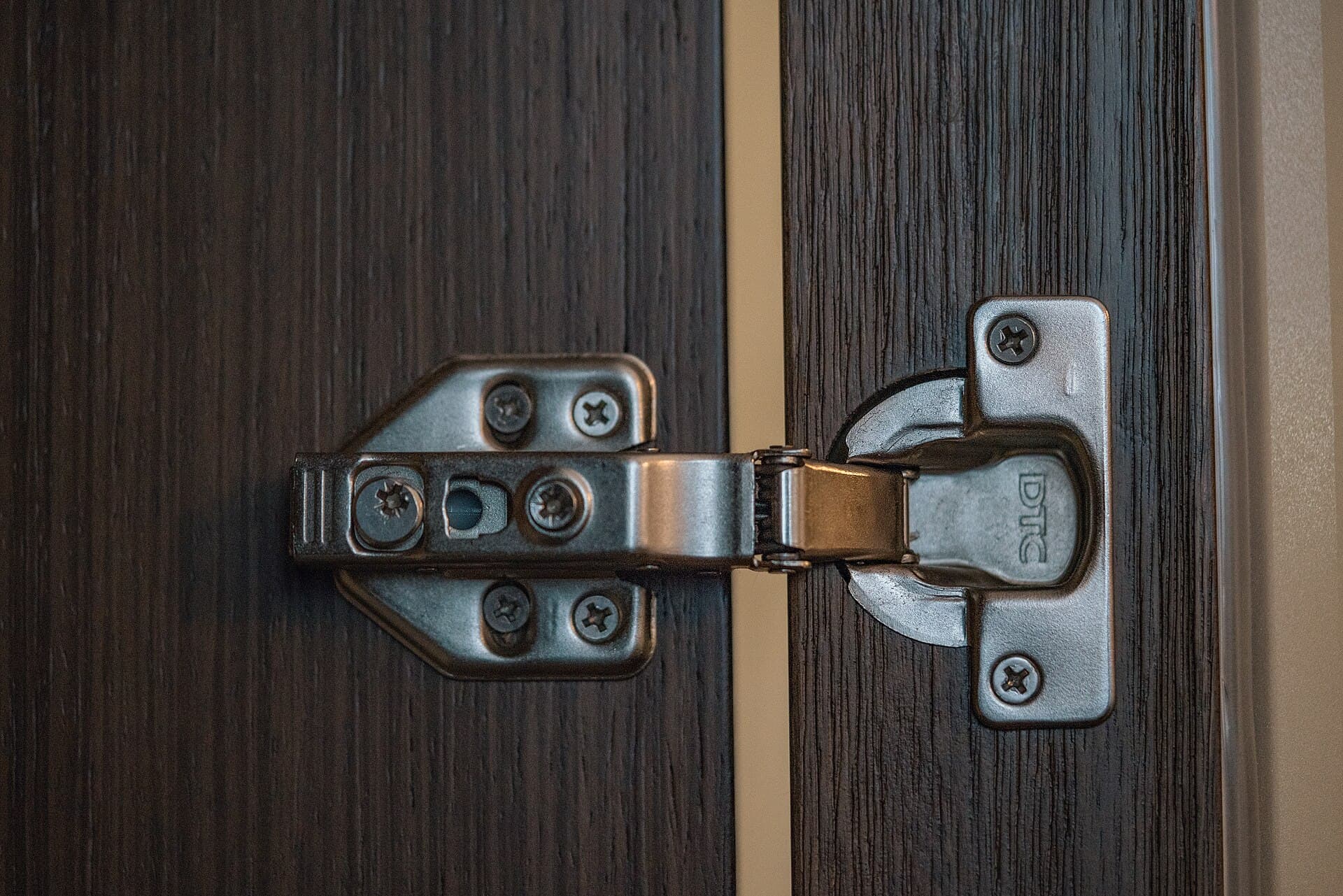
A door that binds, slams or droops is usually a hinge problem wearing a lock costume. The leaf is a lever. The hinges are the fulcrum. Australian houses ask a lot of that fulcrum: a 2100 millimetre solid-timber entry, a fire door with a closer, a pivot blade in a recessed porch.
This is a hanging note. Hinges are the part that still has to work when nobody is looking at them.
Butt hinges, the default that earned it
A butt hinge is two leaves and a pin. Fixed to the door edge and the jamb, it is the ordinary Australian hanging method from a weatherboard cottage to a brick-veneer project home. Loose-pin butts let you lift the leaf off. Fixed-pin or security-pin butts stop a person on the verandah from popping the pin and walking away with the door.
Ball-bearing butts earn their keep on anything heavier than a hollow-core robe. Plain nylon-washer hinges are fine on a light internal. They are not fine on a 50 kilogram entry that also carries a screen.
Size is not a vibe. A 100 millimetre butt is the common house hinge. Heavier leaves want 100 by 75, or a 127 millimetre architectural butt, in a metal that matches the atmosphere. Two screws into a hollow jamb are not a specification. The top hinge carries most of the load. That is the one that loosens first, and the one people ignore while they plane the lock stile.
Finish belongs to the same coastal argument as the rest of the furniture. Stainless or a rated coating near surf; brass or steel inland if you will keep them. A painted mild-steel butt on a peninsula is a rust print on the architrave.
The three-hinge rule, and when four is calmer
Australian door leaves are tall. 2040 millimetres is the old standard. 2100 is common in newer work. A tall, heavy leaf hung on two hinges will twist. The lock side drops. The head binds. Someone planes the meeting stile and calls the door warped.
Three hinges are the minimum on an entry, a solid-core internal, and any door that carries glass or a closer. Place them conventionally: one a short distance down from the head, one a short distance up from the sill, one close to the middle — often slightly above centre on a lock rail.
Four hinges are ordinary on:
- A solid-timber or fire-rated leaf of any real mass.
- A 2100 by 920 entry with glazing.
- Doors that take a heavy closer or a multipoint gearbox.
- Leaves in a hot, dry climate where timber movement is a seasonal event.
Hinge packing — thin cardboard or plastic shims behind a leaf — is how a carpenter corrects a slightly proud jamb without planing a new door. It is a tool, not a lifestyle. If you need a stack of beer coasters, the frame is the problem.
Concealed hinges, and the jobs they should not take
Concealed or cup hinges, the kitchen sort, hide the knuckle. They adjust in three directions and they make a slab door look like a piece of cabinetry. They are excellent on robes, pantry doors and some light internals in a contemporary house.
They are a poor idea on:
- An entry, unless the maker has a tested, heavy concealed system and you are buying that system.
- A fire door. The tested ironmongery is part of the doorset.
- A wet-area door that will see splash, unless the hinge is rated for it. Cup hinges rust from the inside.
- Any leaf whose mass exceeds the hinge rating once a child hangs on it.
There are architectural concealed hinges that mortise into the edge and carry real weight. They need a thicker leaf and a jamb designed for them. They are not a handful of cabinet plates from the pantry job. A parliament hinge is a different object: a butt that lets a door swing back against the wall. Specify the projection. On a deep Federation architrave it is how you chip the paint.
Pivots, blades and the floor that has to help
A pivot door hangs on pins at head and sill, not on a jamb of butts. Contemporary Australian entries like them because the leaf can be a wide blade, offset from the side, with a clean shadow line. The ironmongery is a floor spring or a pivot set, a top pivot, and a closer function that is often built into the floor box.
The floor has to be a structure, not a hope. A floor spring wants a pocket, a level screed, and a conversation with the tiler before the tiles go down. Retrofitting a pivot into a weatherboard hallway with a sprung timber floor is a different, harder job than drawing one on a new slab.
Pivots change the weather story. The meeting stiles are not a traditional rebate. Seals, thresholds and the National Construction Code access path all need a designed gap, not a designer’s 8 millimetre shadow that whistles in a southerly. Bushfire-rated pivot doorsets exist as tested systems. A handsome slab on generic pivots is not a BAL door.
Offset pivots let the leaf clear a reveal or sit in a recessed porch. Centre pivots look calmer and waste more floor. Walk the swing with a tape before you fall in love with the rendering.
Soft close, dampers and the closer that is not optional
“Soft close” is a sales phrase covering several machines.
On a cabinet, it is a damper in the cup hinge. On a house door, it is usually a door closer — overhead, concealed in the head, or in a floor spring — sometimes with a backcheck so the leaf does not blow through the wall in a northerly. Hydraulic control is the point: the door should latch, not slam, and it should not stop 15 millimetres short so someone hips it shut.
A closer is not optional on a fire door that the NCC or the fire schedule requires to be self-closing. That closer has to be in the tested family for the fire doorset. A cupboard damper, a rising-butt hinge, or a wedge of pine is not a closer. Hold-open devices exist; they have to release on detection or power loss as the system allows.
Access doors under the Livable Housing Design Standard and AS 1428 have opening-force limits. A closer sized for a steel fire door and then cranked up to defeat a thick smoke seal will fail a person with a walker. Specify the closer for the leaf weight and the user, then commission it. Adjustment is a service, not a new product every six months.
Soft-close sliding doors use a damper in the track. They are a kindness on a cavity slider. They do not replace a latch if you needed the door to stay shut for fire, acoustics or a toddler.
Rising butts lift the leaf as it opens, useful over a rug. They are not a fire-door closer.
Fire-door ironmongery is a system
AS 1905.1 cares about the doorset. Hinges on a tagged garage or unit door are usually steel ball-bearing butts, a specified size and number, sometimes with intumescent hinge pads. Changing them for a decorative brass set because the hallway is pretty is how you lose the tag in spirit, and sometimes in fact.
The same discipline applies to locks, closers, seals and any hole you are tempted to add. If the hinge screws have elongated their holes, repair the frame. Longer screws into the same tired pine are not a fire-door maintenance.
Salt, weight and the specification in short
Coastal hinges seize at the pin. Specify stainless or a marine-rated coating, and a pin you can still move in year six. Graphite or a proper hinge oil, not a kitchen spray that becomes varnish.
Weight the leaf before you buy the ironmongery. Solid hardwood, a glazed fire door, and a pivot blade are different kilograms. Makers publish hinge ratings. Believe the lower number once a child hangs on the handle.
A short list that prevents most of the callbacks:
- Three hinges on a house door of any substance; four on a heavy, tall, or fire-rated leaf.
- Ball-bearing butts on entries and fire doors; cup hinges only where the mass agrees.
- Security pins on out-swing and external butts.
- Pivots designed with the floor, the sill and the NCC path, not only the elevation.
- Closers sized, rated and adjusted; fire doors in their tested family.
- Fasteners and finishes in the same atmosphere as the rest of the opening.
Two hinges on a 2100 millimetre entry is optimism. The lock stile will record it.
Specify the hanging as carefully as the leaf. The leaf is what people photograph. The hinges are what they swear at in February.
Frequently asked questions
- Why do Australian doors need three hinges?
- A 2040 or 2100 millimetre leaf is tall enough to twist if it hangs on two butts. The third hinge, near the middle, shares the load and keeps the lock stile in plane. Four hinges are calmer on a solid-timber or fire door that carries a closer.
- Can I put concealed cabinet hinges on a house door?
- Cup hinges belong on cabinets and some light internals. A full-height entry or a fire door needs butts, pivots or a tested concealed system sized for the mass. A kitchen hinge on a 40 kilogram leaf is a weekend that becomes a Monday.
- Are fire-door hinges different from ordinary butts?
- Yes. They have to stay in the tested family for that doorset under AS 1905.1 — usually ball-bearing steel butts, the right size and quantity, sometimes with intumescent pads. Decorative brass butts from a house lot are not a substitute.
- Will a soft-close hinge work on an entry?
- Soft-close usually means a closer or a damper, not a magic butt. Entries want a sized door closer or a specialist hinge damper, set so the latch actually clicks. Fire doors must self-close; a cupboard damper is not that closer.
Keep reading
Door hardware finishes for salt and sun
PVD, powdercoat and 316 stainless on a coastal verandah — which finishes survive Australian salt and ultraviolet, and which chalk into a maintenance hobby.
Tom Ashford · 9 January 2025
Door locks that meet Australian insurance
Deadlocks, AS 4145, keying alike and the clauses insurers actually read — what a locksmith specifies so a claim is not lost on a nightlatch.
Tom Ashford · 14 November 2024
When to repair or replace a front door
Rot, delamination, failed seals and heritage value — the cost crossover where an Australian front door stops being a repair and starts being a doorset.
Door Sales editorial · 6 November 2025