When to repair or replace a front door
Rot, delamination, failed seals and heritage value — the cost crossover where an Australian front door stops being a repair and starts being a doorset.
Door Sales editorial · Staff · 6 November 2025 · 7 min read

A front door fails in instalments. The bottom rail softens. The paint checks on the west face. The seal flattens. The lock stile moves in March. None of these, alone, is a skip-bin event. Together, and in the wrong climate, they are a hallway that smells like a wet dog and a lock that no longer throws.
This is a decision note. Federation and Victorian door restoration is the conservation path. Warped, sticking doors and humidity is the movement path. Here is the crossover: when the honest job is still a chisel, and when it is a new leaf.
A short inspection that prevents a showroom
Look at the door as fabric, not as a feeling about the house.
- Bottom rail and stile feet. Probe with a screwdriver you do not love. Soft, dark, or crumbling timber is rot. A painted cushion that gives is not a solid rail.
- End grain at the top. A raw or split top edge means water has been in the core. Stains on the head of the hallway side are a confession.
- Faces. Checking, grey fibres, or a skin that drums when you tap it. Drumming on an engineered door is often delamination.
- Edges and rebate. Daylight around a closed leaf. A lock that will not throw without a hip. Paint build-up pretending to be swell.
- Seals and sill. Flat pile, cracked silicone, a sill that ponds, rust streaks from a steel threshold.
- Frame. Soft sill, racked jamb, a gap behind an architrave that leads to daylight or brick dust.
- Hardware. A deadlock that still bites; a cylinder that turns; hinges that hold the leaf without a twist.
- Glass. Cracked quarries, failed leadlight cement, a pane that is not safety glass where AS 1288 would now require it.
Write down what you find, and which elevation you are on. A south porch in Hobart and a west wall in Perth produce the same complaints for different reasons. The repair is not the same.
Rot, and the scarf that is still worth it
Rot in a solid-timber entry is usually a bottom-rail story. Rain sits, the finish failed, the end grain drank. If the stiles are sound above the damage, a joiner can cut back to honest timber and scarf a new rail, or graft feet onto the stiles. This is ordinary work on Victorian, Federation and Queenslander leaves. It is usually cheaper than a good reproduction, and it keeps the leadlight, the moulds and the overlay calm.
Rot that has travelled — hollow stiles, a lock rail you can indent, fungal smell in the hinge stile — is a different invoice. You can keep cutting. You will be building a new door in old paint. Stop.
Engineered leaves do not scarf like a four-panel. The core is a designed sandwich. Once water is in it, the skin bubbles and the edge swells and the warranty starts talking about climate exclusions. A small corner of damage on an otherwise dry engineered door can sometimes be rebuilt. A soft, heavy bottom rail cannot. Replace the leaf. Keep the frame if the frame is honest.
Hollow-core on an exterior opening is already the wrong product. Do not repair it. Replace it with something that was allowed outside.
Termites complicate the morality. Galleryed stiles are not a patch. Replace the member, then ask why the colony liked that jamb. A new door on an untreated, wet reveal is a sequel.
Delamination, seals and the failures that look cosmetic
Delamination is a face coming away from a core: a veneer lifting, a high-density skin bubbling, a painted hardboard letting go at the bottom. It is often moisture, sometimes heat on a dark west leaf, sometimes a cheap glue in a cheap door. You cannot paint it back on. Small blisters can be injected and clamped by someone patient. A face that has let go across the rail is a replacement.
Failed seals are the most over-diagnosed reason to buy a door. Wool pile flattens. Rubber cracks in ultraviolet. A coastal slider holds a salt pan in the sill. New seals, a clean track, and a closer that actually latches will transform a sound doorset. New seals on a cupped leaf will not. Fix the cup — finish, moisture, hinges — or accept that the door has become a gap.
Energy and condensation complaints sit here. A whistling entry in a Melbourne winter may want seals and a threshold, not a new species of timber. It may also want a thermal-break frame if the existing one is a single-web aluminium fin. Read the energy-rating essay before you replace a leaf that is only leaking at the pile.
Bushfire-rated and fire-rated doorsets are systems. Failed seals on those doors are not a hardware-barn visit. They are a like-for-like reseal in the tested family, or a new tagged doorset. A draught worm from a tub is not an intumescent strip.
Heritage value, and the cost that is not only money
An original door on a Victorian terrace or a Federation street elevation is part of the house’s value, and sometimes part of a planning control. Repair is the default in those streets, not because it is cheaper — it is sometimes not — but because a warehouse slab deletes the thing the overlay was written for.
Reproduction is the honest middle: a new leaf with the right sections when the original is past a scarf. It costs like a custom door because it is one. It keeps the street, the highlight and, if you specify it, a deadlock an insurer will photograph.
A contemporary house has less of that duty and more of a performance duty. If the leaf is a pivot that never sealed, or a dark slab that cooked itself out of plane, replacement with a better system is not a moral failure. It is an admission that the first specification was a rendering.
Insurance does not pay extra for sentiment. It may refuse a claim if the accessible door had no deadlock. A repair that leaves a nightlatch on an accessible opening is an incomplete repair. A replacement that forgets AS 4145 is the same mistake in a new timber.
The cost crossover, in ranges
Numbers move with timber, freight and the city you are in. These are order-of-magnitude figures for thinking, not quotes.
Usually repair
- New seals, hinge screws, a strike adjustment: tens to a few hundred dollars.
- A locksmith service or a closer reset: an hour or two.
- A scarfed bottom rail and a repaint on a solid-timber entry: often $800 to $2,500.
The disputed middle
- An engineered leaf with a wet corner: repair can approach the price of a new leaf in the old jamb.
- Heritage reproduction versus a long conservation repair: get both prices. The overlay may decide.
Usually replace
- A new primed engineered entry, hung, with hardware and paint: commonly $1,500 to $5,000.
- A full doorset and making-good: $3,000 to $8,000 is an ordinary band; custom hardwood and sidelights go higher.
- Tagged fire doorsets and BAL assemblies: price as building products.
Lead times belong in the decision. A repair might be a fortnight. A custom leaf can be two or three months. Living behind plywood has a cost that never appears on the quote.
A decision you can explain
Use a rule you would be happy to say out loud on the verandah.
- Repair when the stiles are sound, the shape is true enough for hinges and a lock, and the door still belongs to the house.
- Reproduce when the original fabric is spent but the elevation is not.
- Replace when the core is wet, the skin has let go, the opening needs a different performance — access, BAL, fire, energy — or the frame is the failure.
- Do the frame if the frame is the failure. A new leaf in a rotten sill is a short story.
- Do not use a plane or a skip bin to avoid a moisture problem in the wall.
Climate is a tie-breaker. A coastal, unsheltered west door that has already been rebuilt once may want a more stable leaf and a porch, not a third scarf. A shaded Federation four-panel with a soft rail wants a joiner.
Replace the door when you would be repairing a memory. Repair it when you would be keeping a tool.
A front door is a weather joint, a lock and a piece of the street. Inspect it like fabric. Price both paths. Then pick the one that leaves the hallway dry and the elevation still looking like the house you meant to keep.
Frequently asked questions
- Is a rotten bottom rail a reason to replace the whole door?
- Not by itself. A joiner can scarf a new rail into a solid-timber leaf if the stiles are sound. If the rot has climbed the stiles, or the leaf is a soaked engineered core, replacement is usually cheaper than honesty.
- When do failed weather seals mean a new door?
- When the rebate is worn, the leaf has cupped past a seal, or the doorset was never a tested system and you now need BAL or energy performance. A tired pile on a sound door is a reseal, not a skip bin.
- Does a heritage overlay force me to repair?
- It often prefers repair of original fabric, and it can require consent for a different leaf on the street. A faithful reproduction is the usual alternative when the original is past a scarf. Check the control before you order a slab.
- What does a front-door replacement cost compared with a repair?
- These are ranges. A joiner’s repair and a repaint might be a few hundred to a couple of thousand dollars. A new engineered entry, hung, sealed and locked, often lands between $1,500 and $5,000. Custom timber, sidelights and a new frame sit higher.
Keep reading
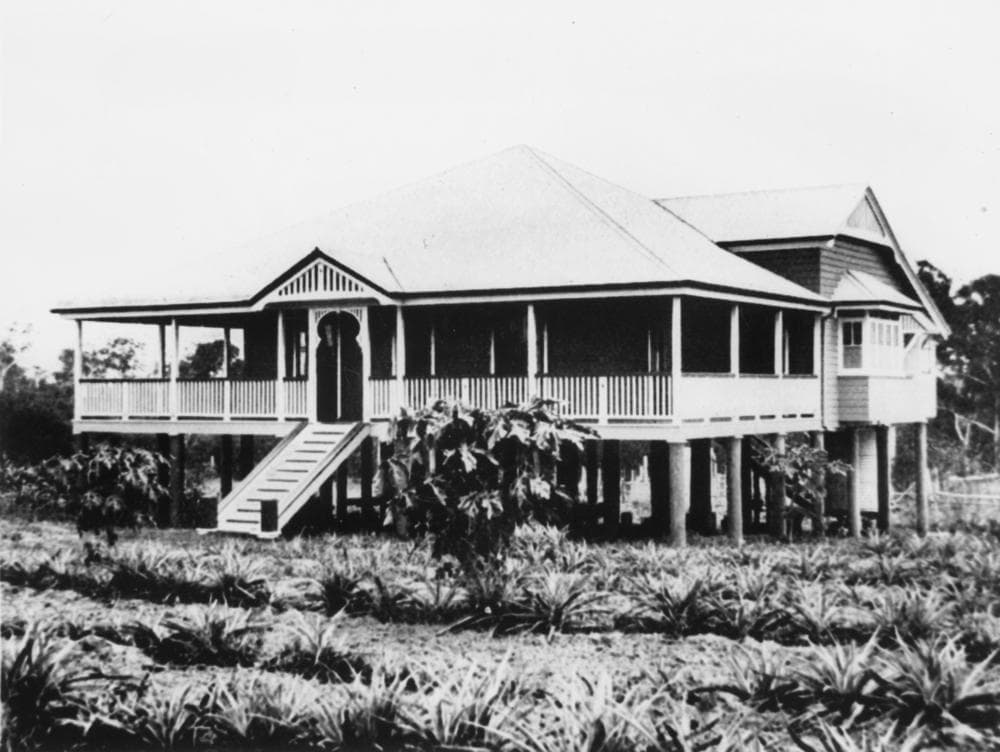
Replacing a front door in weatherboard and brick
Reveals, flashings, brick ties and weatherboard scribers — how to swap an Australian entry without leaving a week of weather in the hallway, or a gap the overlay will notice.
Elena Vukovic · 18 September 2025
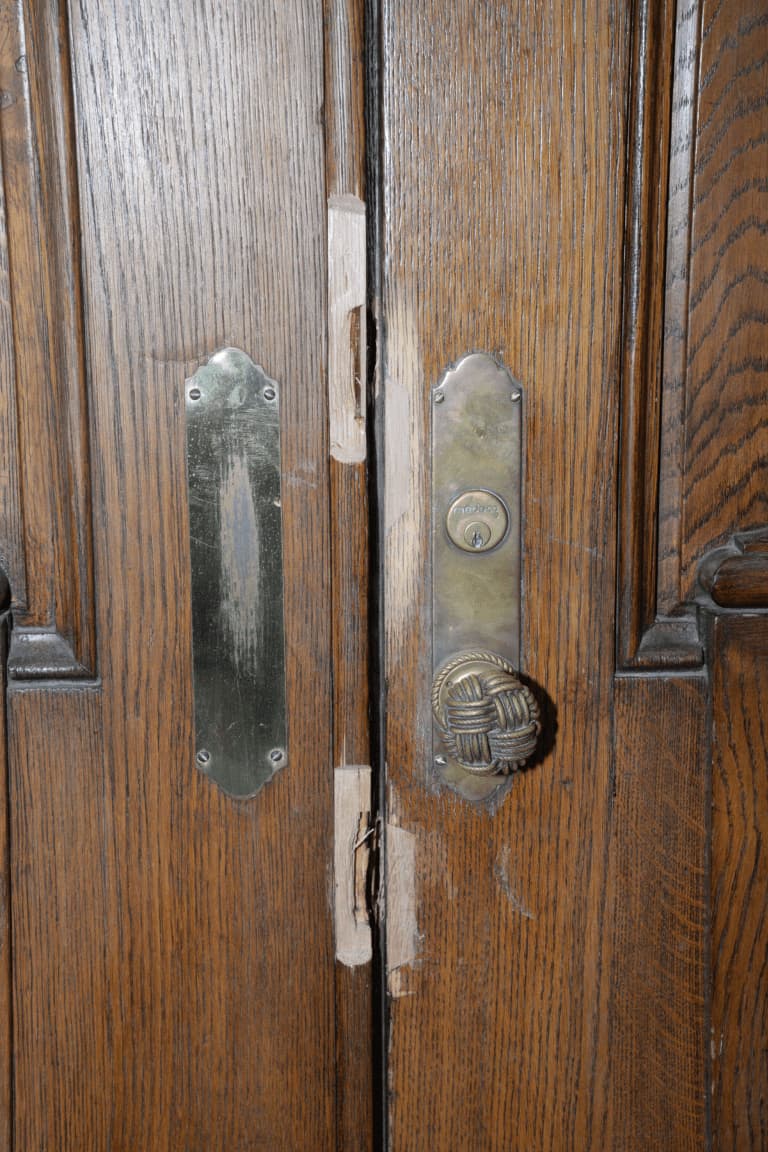
Warped, sticking doors and humidity
Seasonal movement, planing, hinge packing and coastal humidity — why an Australian timber door binds in March and rattles in September, and what to do before you reach for a plane.
Elena Vukovic · 14 August 2025
Painting and finishing exterior timber doors
Prep, oils versus paint, ultraviolet and recoating cycles — how an Australian timber entry survives a west wall, a south porch and the salt it cannot see.
Door Sales editorial · 5 December 2024